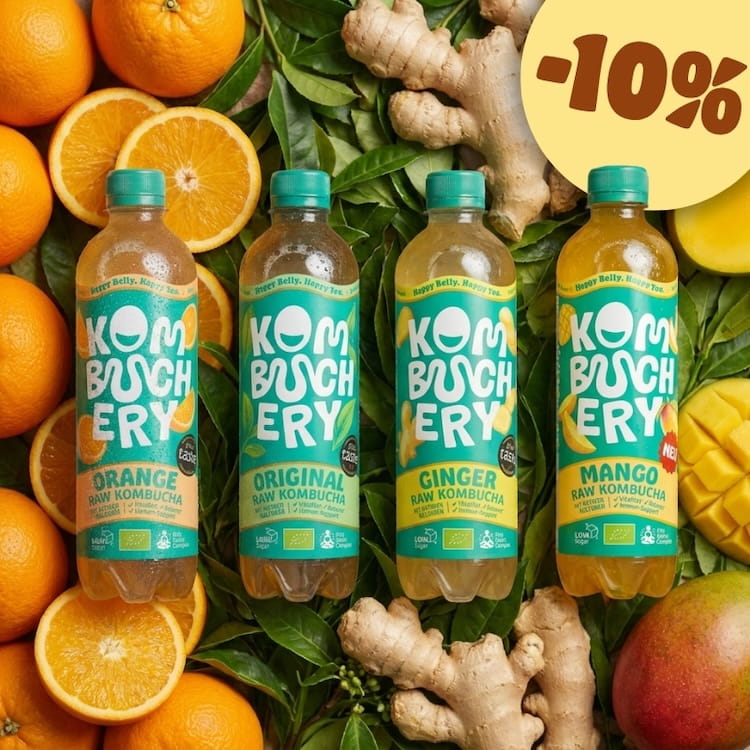
product image

select caret down
Login

Note: The content of this article is for general information purposes only. It does not replace medical or nutritional advice and does not constitute health-related statements about our products.

– Before you read on –

We don't just know everything about Kombucha ...

We also brew the best raw kombucha ourselves. If you're thirsty, stop by our shop and see for yourself!

Try kombuchery

How much kombucha is good for me?

Our tips on dosage, duration of use and what your body really needs

Kombucha is more than just a trendy drink - it's alive, naturally fermented, and packed with microorganisms. But how much should you actually drink? How often? And what exactly is in it? In this post, you'll get all the important information about the dosage, duration of use, and ingredients of your favorite Kombuchery varieties.

How much kombucha should I drink daily?

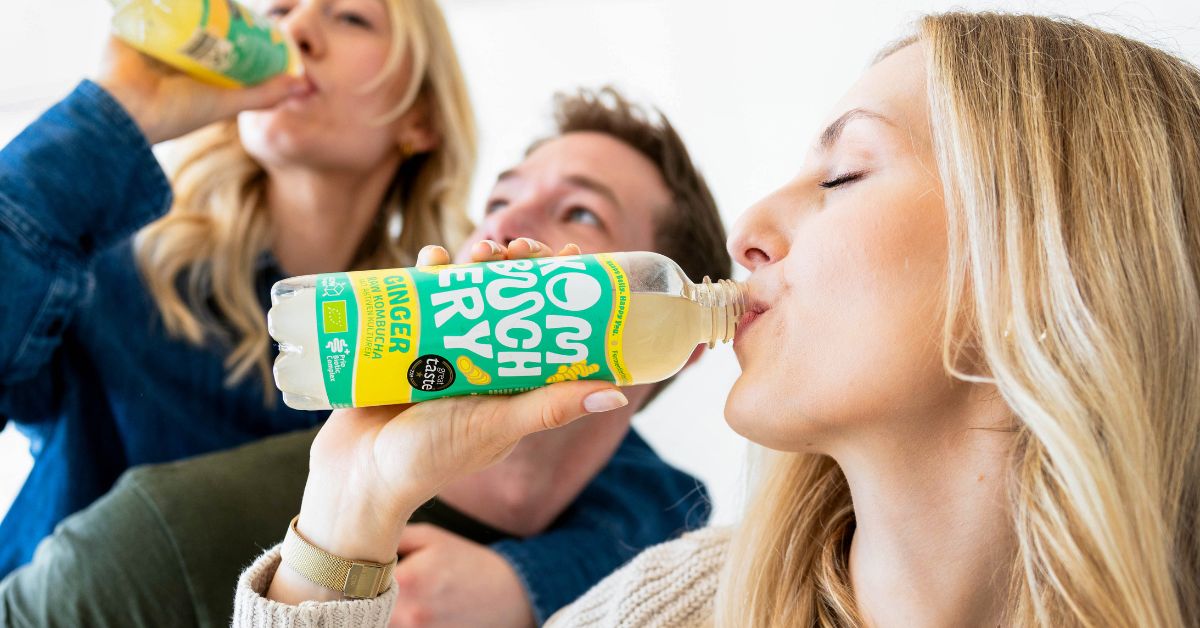
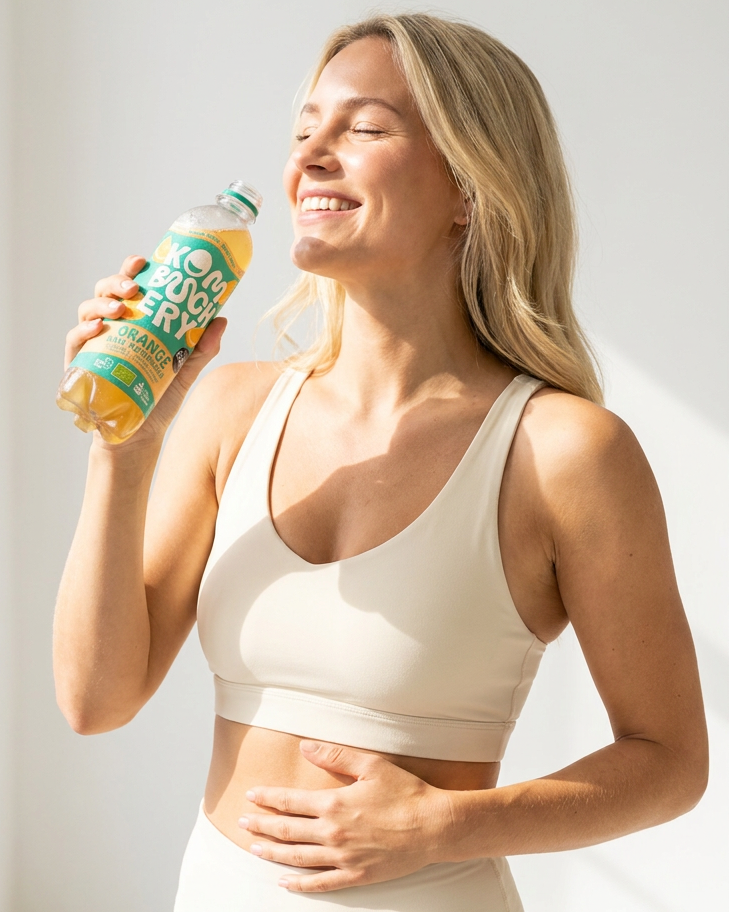
To start, we recommend about one bottle per day*, which is 400 ml of living kombucha full of fermented power. This gives your body enough to benefit from the living microorganisms without overtaxing it.

If your stomach feels good, you can increase the amount as needed. Many people drink more than one bottle per day, for example, split between morning and evening or depending on how they feel that day. The important thing is: Listen to your body and find your own kombucha routine.

How long should I drink kombucha?

Kombucha is not intended as a cure, but as a daily gut routine

Some people start with a 30-day kombucha challenge to connect more consciously with their own well-being. But kombucha doesn't work like a medicine, but like a natural food. This means: The more regularly you drink it, the better your microbiome can benefit from it.

The fermented microorganisms love consistency. And so does your body, by the way.

🧠 Our tip: Integrate kombucha into your daily routine, for example, first thing in the morning, at lunchtime before lunch, or as a healthy after-work drink in the evening.

Save €24 now

What happens after 30 days of kombucha?

Those who drink kombucha daily for 30 days often notice more than just a difference. Our community reports after one month primarily:

✔️ a noticeably calmer gut feeling
✔️ more regular bowel movements
✔️ less craving for sweet drinks
✔️ more energy and clarity in everyday life
✔️ a new awareness of nutrition and body

Of course, every body reacts differently, but precisely because kombucha is alive, it works on several levels. And the best part: the daily bottle quickly becomes a ritual you look forward to.

Create your individual 30-day gut routine

What's in a bottle of Kombuchery?

Our ingredient list is as clear and transparent as our claim: honest kombucha without frills, and you can taste it. Depending on the variety, you'll find in your bottle:

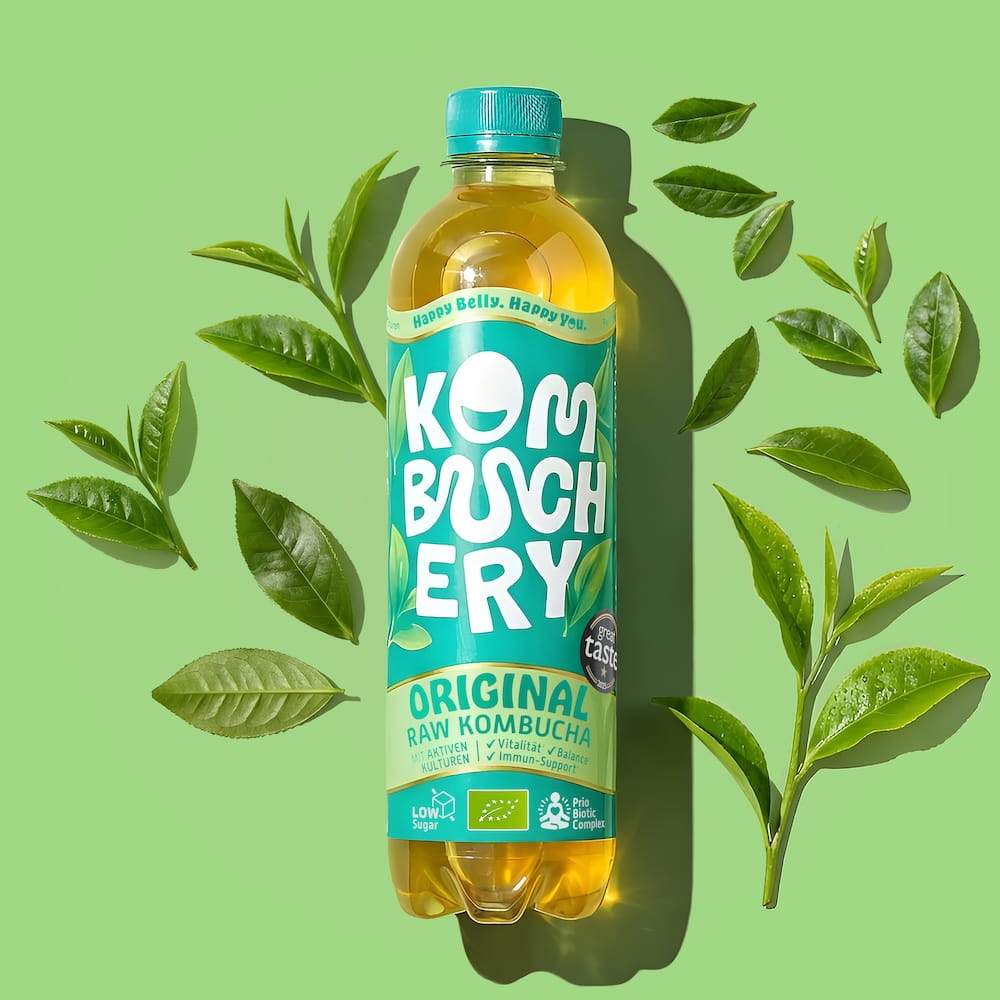
✔️ Organic green tea*
✔️ Organic cane sugar (largely broken down by fermentation)
✔️ Natural mineral water
✔️ Organic kombucha cultures (organic yeast cultures, bacterial cultures, Lactobacillus Rhamnosus)
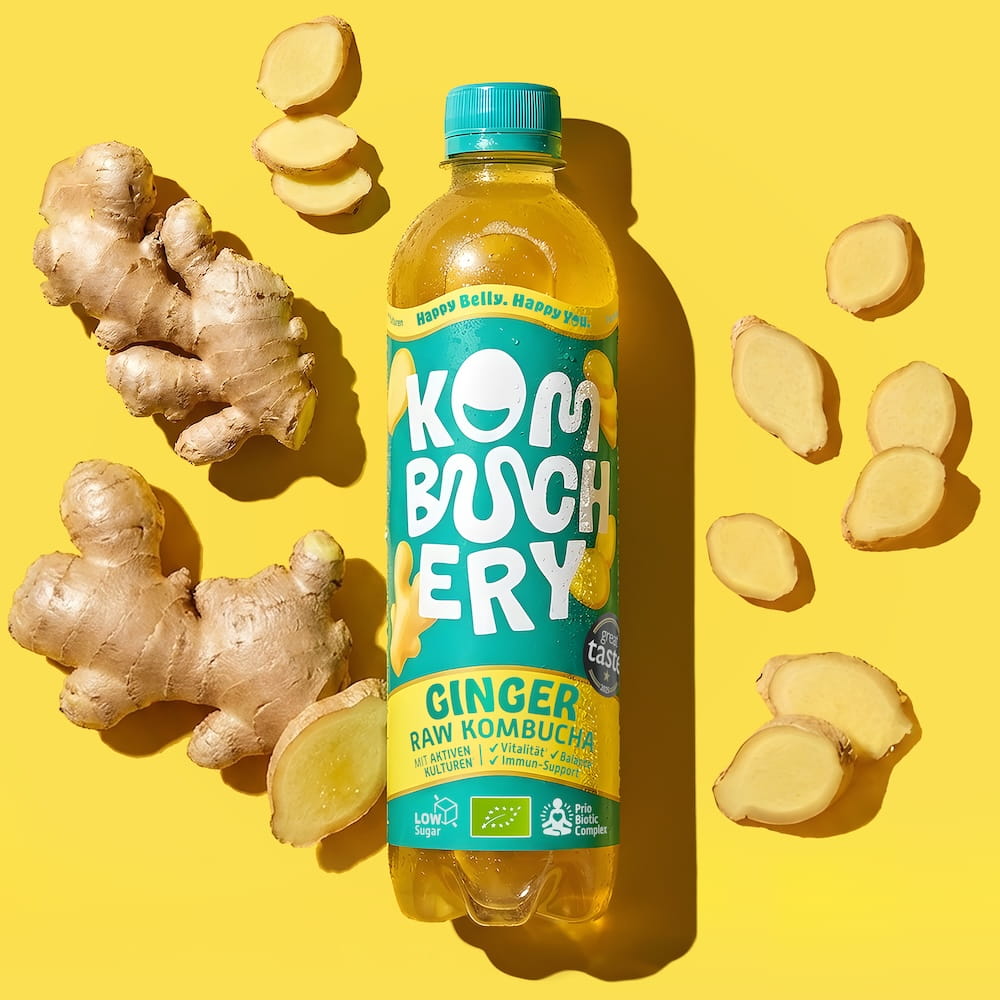
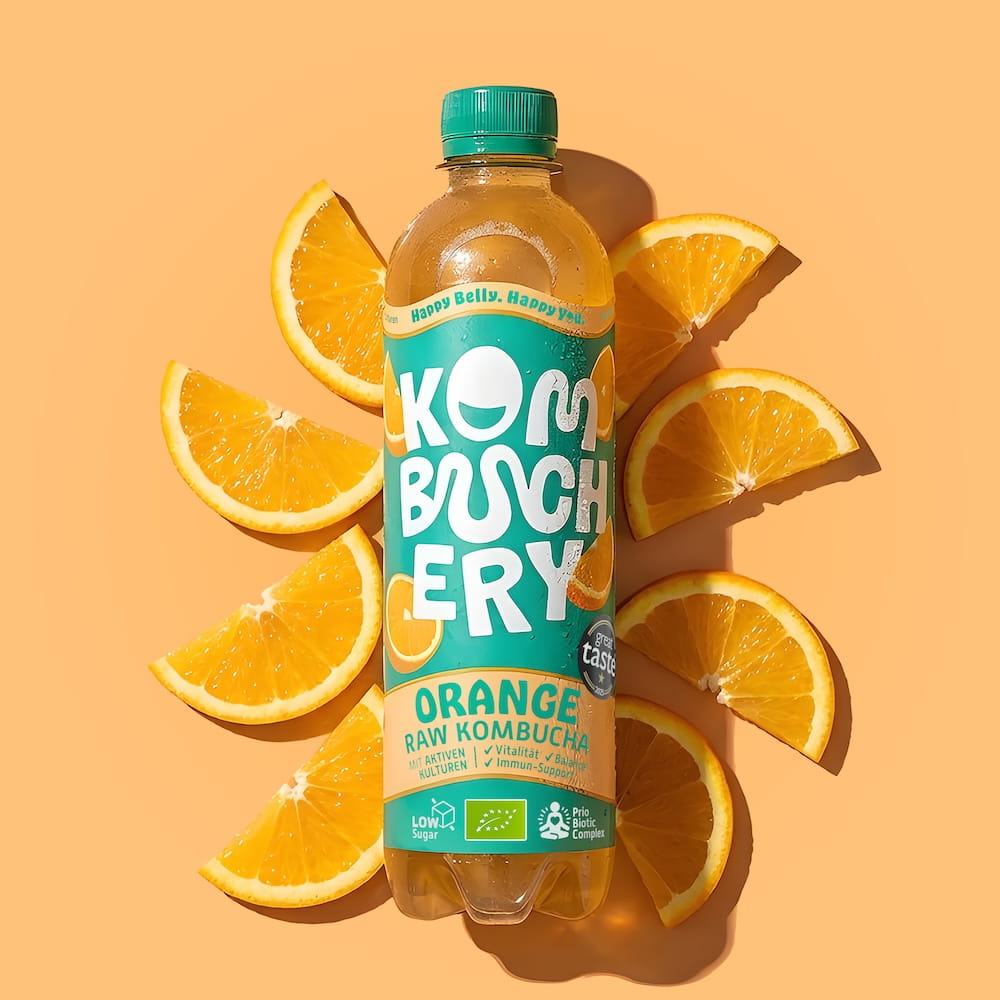
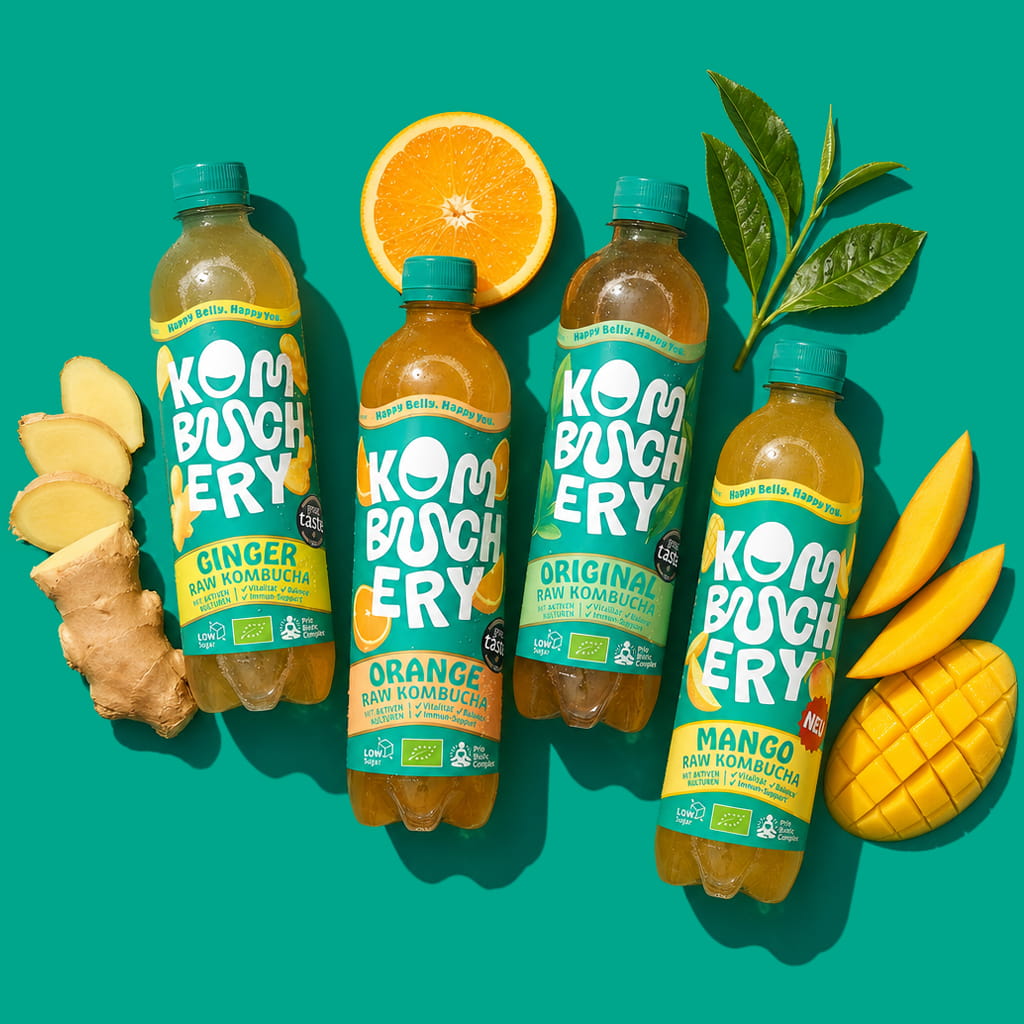
✔️ Fresh organic direct juice (e.g. ginger or orange)

🚫 No pasteurization, no flavorings, no concentrates.
100% alive and it stays that way until the last bottle.

Nutrition facts at a glance

What you're really giving your body (per 100 ml)

  • Energy: 49 kJ / 12 kcal
  • Fat: 0 g
  • Carbohydrates: 3 g
  • of which sugar: 2.6 g
  • Protein: 0 g
  • Salt: < 0.01 g
  • Living microorganisms: > 1 million CFU/ml

👉 One bottle contains 400 ml, which corresponds to about 1 serving per day if you want to build up your daily kombucha routine.

Conclusion: A drink that works daily – every day

Kombucha is not a miracle cure, but it brings a little balance to your body every day. Without any frills, just with fermented power from natural ingredients.

Whether you drink it as a daily ritual or as a healthy substitute for soda, coffee, or alcohol. It's worth integrating kombucha permanently into your everyday life.


*The mentioned quantities are general empirical values from practice. This does not constitute a medical consumption recommendation.

*Kombucha naturally contains caffeine (theine), as it is fermented based on green tea. Individuals with high caffeine sensitivity should adjust their consumption individually.
Leave a comment

Please note, comments need to be approved before they are published.

This site is protected by hCaptcha and the hCaptcha Privacy Policy and Terms of Service apply.

Note: This article is intended for informational purposes only and should not be construed as professional analysis, advice, or medical information. It contains the author's personal opinion based on researched literature and personal experience on the subject.

Recommended articles for you

You can find more of my articles, from A, like non-alcoholic kombucha cocktails, to Z, like lemon-ginger kombucha, on our Kombuchery blog. Let's learn more about kombucha together!

View all

Kombucha Guide Berlin: Die 10 besten Cafés & Restaurants in 5 Bezirken

Kombucha Guide Berlin: The 10 Best Cafes & Restaurants in 5 Districts

Urban Wellness in Berlin: 5 Neighborhoods Where You'll Find Great Kombucha Berlin is one of Europe's most exciting cities when it comes to modern food and drink culture. Kombucha is no longer a niche product here, but part of a...

Read moreabout Kombucha Guide Berlin: The 10 Best Cafes & Restaurants in 5 Districts

Wer kann mehr? Der Vergleich: Kombucha, Brottrunk & funktionale Limonaden

Who Can Do More? The Comparison: Kombucha, Brottrunk & Functional Lemonades

In recent years, the range of beverages available has changed significantly. In addition to classic soft drinks, more and more fermented beverages and so-called functional lemonades are available in supermarkets today. Particularly popular are kombucha, kvass, and modern lemonades with...

Read moreabout Who Can Do More? The Comparison: Kombucha, Brottrunk & Functional Lemonades

Kombucha und seine Wirkung: Wissenschaftliche Studien zu Inhaltsstoffen, Fermentation und Gesundheit

Kombucha and Its Effects: Scientific Studies on Ingredients, Fermentation, and Health

Kombucha is one of the most intensively researched fermented beverages in recent years. Modern microbiological, nutritional, and clinical studies show that the drink possesses an exceptionally complex biochemical composition. During fermentation, numerous bioactive compounds are formed, including organic acids, polyphenols,...

Read moreabout Kombucha and Its Effects: Scientific Studies on Ingredients, Fermentation, and Health

🌍 World Kombucha Day am 21. Februar: Geschichte, Fakten & Tipps zum Feiern

🌍 World Kombucha Day on February 21: History, Facts & Tips for Celebrating

Celebrate the Effervescent History of Kombucha Every year on February 21st, kombucha fans worldwide celebrate World Kombucha Day. But why exactly does this day exist? It's simple: it's a tribute to a beverage that has delighted, inspired, and refreshed people...

Read moreabout 🌍 World Kombucha Day on February 21: History, Facts & Tips for Celebrating

Die besten Nahrungsergänzungsmittel: Gesundheit gezielt stärken ohne Risiko

The Best Nutritional Supplements: Targeted Health Boosts Without Risk

Dietary Supplements: Beneficial for all who can't live perfectly healthy every day In a stressful everyday life, many people can't always manage to eat optimally healthy every day. Shift work, long days in the office, little time for fresh cooking,...

Read moreabout The Best Nutritional Supplements: Targeted Health Boosts Without Risk

Darmkuren im Check: Was wirklich wirkt

Bowel Cleanses Under Scrutiny: What Really Works

Colon cleanses, detox programs, and so-called "bowel purifications" have enjoyed great popularity for years. They promise a fresh start for the body, more energy, better digestion, and increased well-being. Especially in the context of gut health, such promises seem plausible...

Read moreabout Bowel Cleanses Under Scrutiny: What Really Works

Präbiotische/ probiotische Hautpflege: Hilft sie wirklich?

Prebiotic/probiotic skincare: Does it really work?

Prebiotic and Probiotic Skincare: Trend or Scientifically Effective? The Skin Microbiome: A Complex Ecosystem The skin is the largest human organ and a complex ecosystem inhabited by a multitude of microorganisms, collectively known as the skin microbiome. This consists of...

Read moreabout Prebiotic/probiotic skincare: Does it really work?

Wozu braucht der Körper Präbiotika?

Why does the body need prebiotics?

Prebiotics are often overshadowed by their more well-known "relatives," probiotics. While probiotics are living microorganisms that we ingest through food or supplements, prebiotics serve as food for the beneficial bacteria in the gut. They are, so to speak, the fuel...

Read moreabout Why does the body need prebiotics?

Wie viel Kombucha ist gut für dich?

How much kombucha is good for you?

How much kombucha is good for me? Our tips on dosage, duration of use and what your body really needs Kombucha is more than just a trendy drink - it's alive, naturally fermented, and packed with microorganisms. But how much...

Read moreabout How much kombucha is good for you?

Neue Rezeptur mit Vitamin C aus Acerola: *Vitamin C trägt zu einer normalen Funktion des Immunsystems, einem normalen Energiestoffwechsel sowie zum Schutz der Zellen vor oxidativem Stress bei.
  • Vitamin C contributes to the normal function of the immune system.
  • Vitamin C contributes to normal psychological function.
  • Vitamin C contributes to normal energy-yielding metabolism.
  • Vitamin C contributes to the reduction of tiredness and fatigue.
  • Vitamin C contributes to the normal functioning of the nervous system.
  • Vitamin C contributes to the protection of cells from oxidative stress.
  • Vitamin C contributes to the regeneration of the reduced form of vitamin E.
  • Vitamin C contributes to normal collagen formation for the normal function of the skin.
  • Vitamin C contributes to normal collagen formation for the normal function of blood vessels.
  • Vitamin C contributes to normal collagen formation for the normal function of bones, cartilage, teeth and gums.
  • Vitamin C increases iron absorption.