




Fermented Foods Have a Long Tradition
Not all microorganisms are harmful to humans. Many species occur naturally in food, on our skin, or in the human body. In fermented foods, microorganisms such as bacteria or yeasts play important roles during fermentation. However, the living microorganisms, vitamins, minerals, or other fermentation products that are actually present afterward depend heavily on the specific food and manufacturing process.
You've probably already unconsciously encountered various fermented foods in your daily life:
Such as:
- Kombucha
- Kefir
- Kimchi
- Yogurt
- Miso
- Sauerkraut
- various types of cheese
What Happens During Food Fermentation?
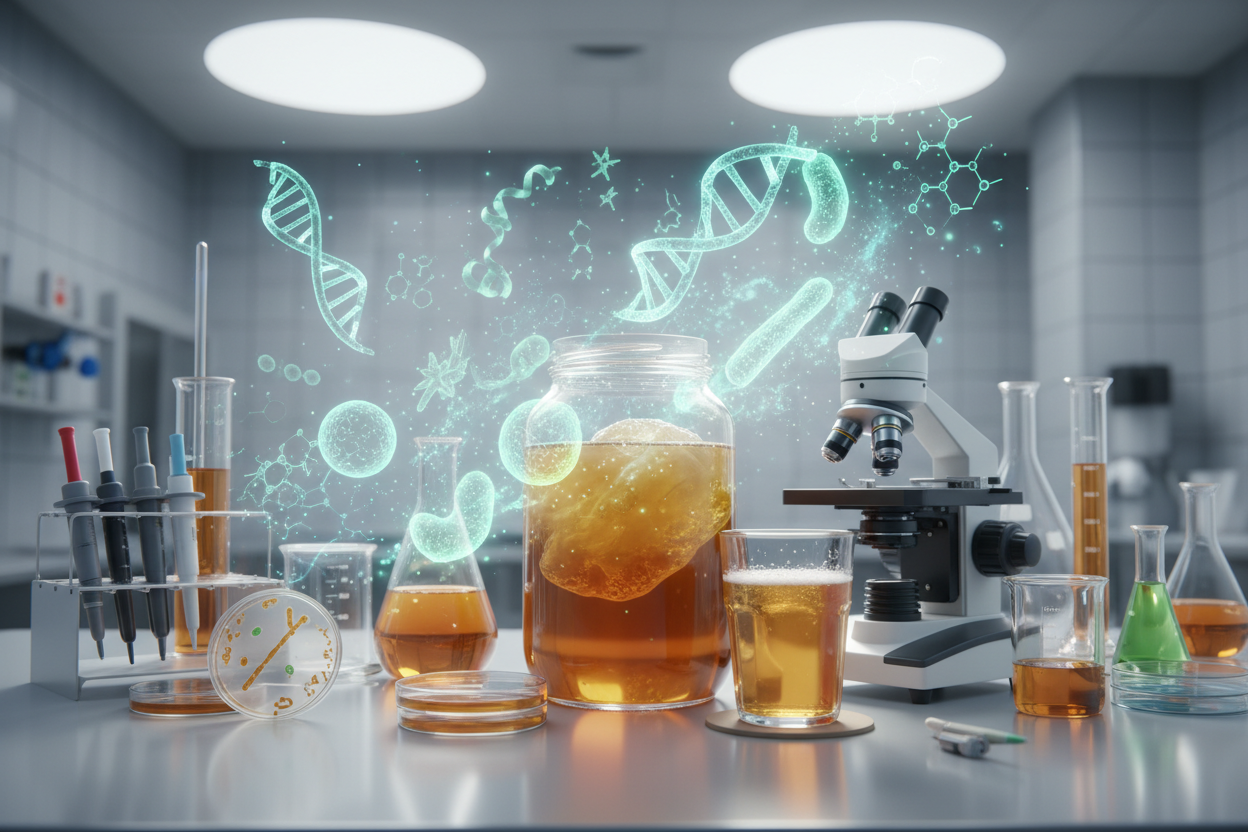
People have been fermenting food for many centuries. In the past, fermentation was a simple solution for consuming food even in the cold winter. The nutrients and living microorganisms present, and how long a fermented food can be stored, depend on the specific product and manufacturing process. Fermentation of foods or beverages, such as kombucha, is not a highly complex industrial process. If one looks more closely at the process of fermentation, enzymes and microorganisms break down the starch and sugar present in the "organic material" (food) and convert them into acid, gases, or alcohol. It is an entirely natural process that can occur under anaerobic conditions. The basic prerequisites for fermentation are microorganisms, such as lactic acid bacteria.
Fermented Foods, Gut, and Microbiome
Fermented foods are created with the help of microorganisms such as bacteria or yeasts. This changes the taste, consistency, and composition of the original food.
Depending on the product, living microorganisms as well as various organic acids and other fermentation products may be present after fermentation.
Fermented foods such as sauerkraut, kimchi, kefir, or kombucha therefore primarily bring one thing to the diet: diversity in foods, flavors, and manufacturing processes.












Share: